Black and white portrait of Furqan Azhar in a suit and turtleneck, wearing clear-framed glasses

I build what the interface hides.

Full-stack developer with a backend focus, based in Lahore.

Behind the screens I write Node.js and PostgreSQL APIs, ERP integrations, real-time rooms, and a web-to-Unity session bridge.

  • Node.js
  • React
  • PostgreSQL
  • Docker
  • Odoo
  • QuickBooks
  • ERPNext
  • Microsoft Dynamics
  • Frappe Helpdesk
  • Redis
  • Socket.IO
  • Django
  • FastAPI
  • TypeScript

Selected projects.

Six outside systems, one backend.

Tranero, Zweidevs, 2025 to 2026

I wrote Tranero’s backend for invoice management, account access, subscriptions, and administration while working at Zweidevs.

Read how it was built
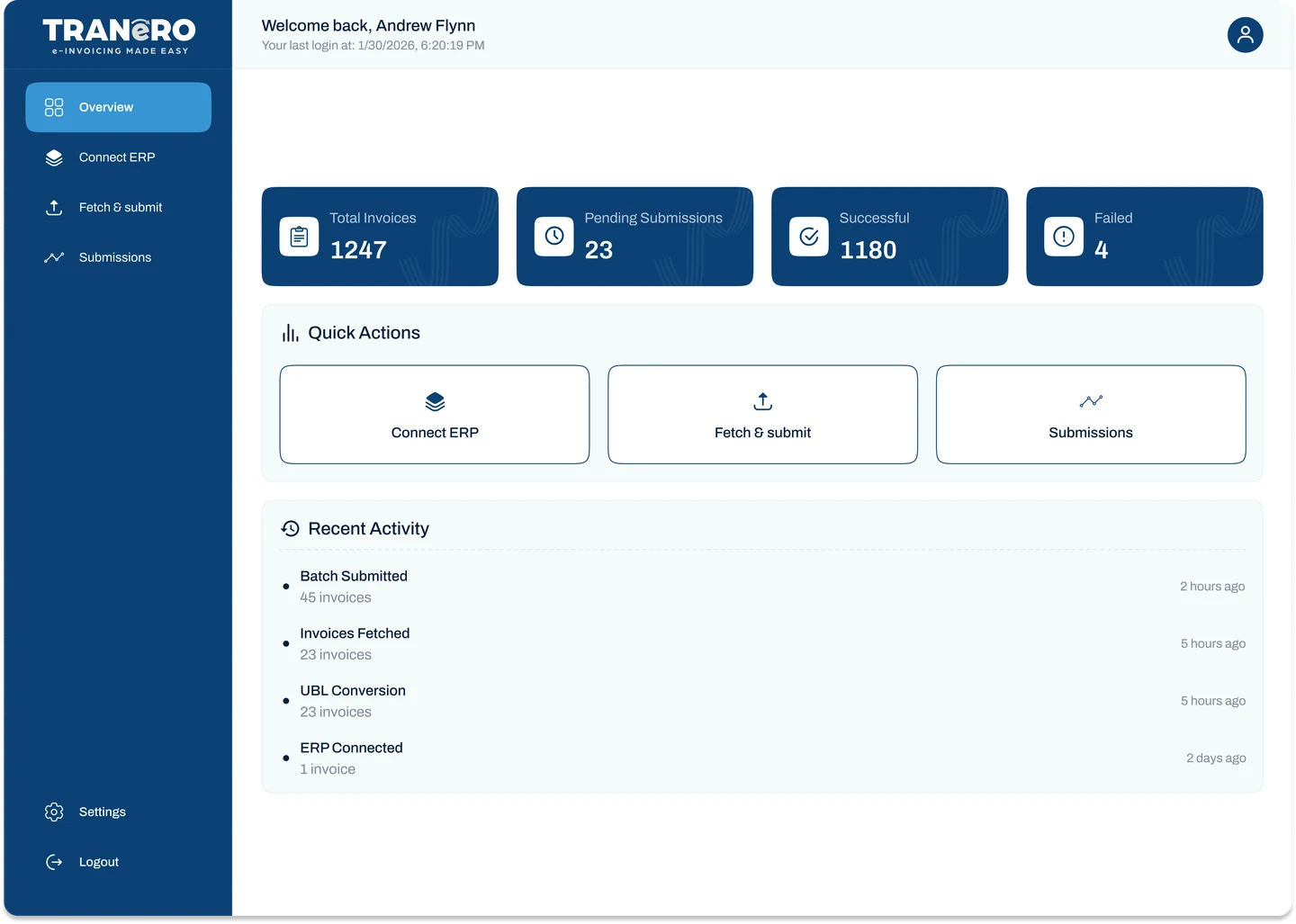
Tranero's published dashboard preview showing ERP connections, invoice submission, and demo activity
Inside the backend
Account access, Subscriptions, Administrative APIs, Invoice workflows
Invoice systems
Odoo, QuickBooks, ERPNext, Microsoft Dynamics
Compliance
Nigerian NRS
Support
Frappe Helpdesk
Published product preview with demo data. My contribution: the backend.Visit Tranero

Floor-plan images in, editable geometry out.

Floor-plan Processing, Bachelor's FYP, Early 2025

An authenticated FastAPI service for floor-plan upload and room segmentation, paired with a React interface for inspecting and editing geometry.

Read how it was built

Actual API source, room segmentation

overlay, room_polygons = segment_rooms(file_path)

_, buffer_img = cv2.imencode('.png', overlay)
overlay_base64 = base64.b64encode(buffer_img).decode('utf-8')
Explanatory geometry with actual segmentation API source; not model output.Inspect the API

14 spiders, each written for its own site.

Web Extraction Pipelines, 2024 to 2025

Site-specific Scrapy spiders for collecting college and university course information, with source-linked text and structured-output examples.

Read how it was built

Source URL

https://www.canadorecollege.ca/programs/part-time/accounting-foundations-certificate-program

Accounting Foundations Certificate Program_6237.txt

Accounting Foundations Certificate Program

Code:   020110
Type:   Part-Time
Campus: Online
Fields from a saved extraction, with its original source URL.Inspect the output

How each one was built.

The problem, the work, the result, and exactly where my contribution stops.

Tranero

Role
Backend owner at Zweidevs
When
Zweidevs, 2025 to 2026
  • Python
  • Django
  • Invoice integrations
  • Odoo
  • QuickBooks
  • ERPNext
  • Microsoft Dynamics
  • Frappe Helpdesk
Visit Tranero

One backend, several external workflows.

Invoice management needed to connect four business systems with a regulatory service, while account access, subscriptions, administration, and support ticketing remained part of the same product. Each integration had its own boundary and purpose.

Own the product backend and its integration boundaries.

  • Implemented the backend supporting account access, subscriptions, administrative operations, and invoice-management workflows.
  • Built invoice-management integrations with Odoo, QuickBooks, ERPNext, and Microsoft Dynamics.
  • Integrated the Nigerian NRS service into Tranero’s compliance workflow.
  • Connected the self-hosted Frappe Helpdesk ticketing system to support the product’s support workflow.

A complete backend ownership scope.

My contribution covered Tranero’s backend and the named invoice, NRS, and ticketing integrations. The public site gives reviewers a product to inspect; the contribution map shows my implementation scope without publishing private source or client records.

The central engineering responsibility was owning the backend across invoice systems, regulatory integration, administration, and support, rather than delivering a single isolated connector.

Scope and evidence

This study describes the backend I owned and the integrations I implemented. The public product pages provide context for invoice management, ERP connections, and compliance workflows. Backend ownership and the named implementation scope are confirmed by me; the application source remains private. The public website is presented as product context rather than evidence of marketing-interface authorship.

  • Backend ownership: I wrote Tranero’s backend at Zweidevs.
  • Invoice-management scope: Odoo, QuickBooks, ERPNext, and Microsoft Dynamics integrations.
  • Compliance and support scope: Nigerian NRS integration and self-hosted Frappe Helpdesk ticketing.
  • Public product context: the invoicing page describes invoice creation, tracking, PDF/XML generation, and ERP integration.
  • Public product context: the API and compliance pages show ERP-to-tax-authority workflows; the site currently uses FIRS terminology, while my implementation scope uses the NRS name I confirmed.

Public product context: Tranero: invoicing, compliance, and API integration, Tranero, Public product pages, Inspected October 2026. The invoicing, API-integration, and compliance pages describe invoice creation and tracking, ERP connections, digital invoice formats, and tax-authority submission workflows. Their marketing performance and certification claims are not used as portfolio results.

Visit the product site

Floor-plan Processing

Role
Full-stack application and model integration
When
Bachelor's FYP, Early 2025
  • Python
  • FastAPI
  • React / TypeScript
  • Ultralytics YOLO
  • Flask
  • PyTorch
  • OpenCV
  • NumPy
Source code

Image output and geometry need different contracts.

A rendered image, line coordinates, confidence scores, and room contours are different outputs. The application needs explicit request fields and response shapes for each service before those outputs can form one reliable flow.

Follow the boundaries visible in the source.

  • Keep checkpoint loading and line inference in the separate model service.
  • Expose uploads and room segmentation through FastAPI, returning a base64 image and room polygons.
  • Use OpenCV to resize segmentation masks and extract contours in the original image dimensions.
  • Represent editable vertices and edges in the React canvas rather than treating the preview image as the geometry itself.

Inspectable prototype components.

The repositories provide inference-wrapper code, a FastAPI room-segmentation API, and an editable frontend canvas. The remaining contract mismatch is stated explicitly, so these components are presented as a prototype rather than a completed GNN pipeline.

The practical next step is to align the uploader with the model service's request and response contract. That is a specific integration task supported by the code.

Scope and evidence

The FastAPI service handles room segmentation; line inference is in the separate Flask service. The current uploader expects an SVG response from /process/ with a file field, while GLSP/api.py accepts an image field at /process and returns JSON. These public components therefore do not substantiate a verified end-to-end application. The reviewed code also does not substantiate the previous GNN-classification or reproduced-accuracy claims.

  • backend/app/api/endpoints.py defines account, upload, room-segmentation, and recent-file endpoints.
  • yolo_segmentation.py runs an Ultralytics YOLO checkpoint, resizes masks, and extracts contours with OpenCV.
  • FloorPlanUploader.tsx stores room polygons and a base64 overlay returned by the segmentation service.
  • FloorPlanCanvas.tsx contains vertex, edge, selection, grid, and coordinate-editing interactions.
  • GLSP/api.py contains a separate Flask/PyTorch inference wrapper; its request and response contract differs from the current uploader.

Separate model-service source: GLSP model-inference API wrapper, 969Furqan / public repository, GitHub source, Inspected October 2026. The wrapper loads a checkpoint, runs LineVectorizer inference, postprocesses line predictions, and returns image, lines, and scores as JSON. The repository name does not establish original model authorship or a GNN architecture.

Visit the product site

Web Extraction Pipelines

Role
Site-specific extraction and processing
When
2024 to 2025
  • Python
  • Scrapy
  • BeautifulSoup
  • csv / json
  • Gemini API
Source code

Each website exposes useful content differently.

Course pages use different content containers and heading structures. Extraction needs site-specific selectors, traceable source URLs, safe filenames, and a defined set of fields for later CSV conversion.

Keep the extraction method visible.

  • Read prepared URL lists and use a separate spider for each site's content structure.
  • Extract relevant text, retain the source URL, and sanitise filenames before writing files.
  • Keep included text-to-JSON examples attributed to the pipeline named in their README.
  • Check JSON object shape and expected keys before writing CSV fields in a defined order.

Methods that can be inspected.

The public code demonstrates site-specific extraction and structured-output conversion. The 14-spider count is a repository fact; it is separate from any unverified client record volume or delivery-performance claim.

Source URLs, exact selectors, and field checks provide concrete evidence of how data moves from a page into a structured file.

Scope and evidence

The evidence supports site-specific extraction methods and structured-output examples. ETL_Pipeline-1/readme.md credits asadali27232/ETL_Pipeline, so the included ETL code is not presented as an entirely original framework. The source does not establish 10,000 client records, anti-bot bypass, or universal pagination support.

  • The repository tree contains 14 spider files excluding __init__.py.
  • Canadore's spider handles missing pages, selects main content, and sanitises output filenames.
  • Durham's spider combines banner and main-program content and saves the source URL with the text.
  • ETL_Pipeline-1/json_to_csv.py rejects invalid JSON objects and mismatched field keys before writing ordered CSV rows.
  • The ETL README links its external pipeline source; txt_to_json.py calls a Gemini summarisation model.
  • Saved Canadore College text outputs retain the original URL alongside extracted program content. The portfolio excerpt reproduces the Accounting Foundations program fields from the inspected repository snapshot.

Extraction source: Canadore course-content spider, 969Furqan / public repository, GitHub source, Inspected October 2026. The source reads links.csv, skips 404 responses, selects the main content, sanitises filenames, and writes the source URL with the extracted text.

Visit the product site

The whole stack.

Frontend & product engineering
React, TypeScript, Next.js, TanStack Router, TanStack Query, TanStack Start, Tailwind CSS, Vite
Backend & API engineering
Node.js, Express, Prisma, Django, Django REST Framework, FastAPI, Flask, Celery
Databases & real-time systems
PostgreSQL, Prisma, Django ORM, SQLAlchemy, Redis, Socket.IO
Business system integrations
Odoo, QuickBooks, ERPNext, Microsoft Dynamics, Frappe Helpdesk
Build & delivery tooling
Docker, Git, GitHub, Prisma Migrations
Programming & algorithms
Python, JavaScript, TypeScript
Computer vision & model integration
PyTorch, Ultralytics YOLO, OpenCV, NumPy, scikit-image
Data extraction & processing
Scrapy, BeautifulSoup, Python csv/json, Gemini API
Verification & documentation
Automated Tests, Playwright, OpenAPI, Technical Documentation
  1. May 2026 to Present

    Full Stack Developer (Contract)

    Contract Based Work

    Build Node.js/PostgreSQL APIs and a React dashboard with messaging, room presence, and a Unity session bridge.

    Technical responsibilities
    • Built Express/Prisma/PostgreSQL APIs for accounts, booths, job applications, coins, and user progression.
    • Added messaging, Redis/Socket.IO presence, room-capacity checks, and a React-to-Unity launch-ticket bridge.
    • Added Docker build stages, Prisma migrations, automated tests, and OpenAPI documentation.
  2. Oct 2025 to Apr 2026

    Backend Developer

    Zweidevs (Pvt) Ltd, Lahore, Pakistan

    Tranero

    Owned Tranero’s backend, invoice-system integrations, Nigerian NRS compliance integration, and self-hosted Frappe Helpdesk ticketing.

    Technical responsibilities
    • Owned Tranero’s backend: account access, subscriptions, administrative APIs, and invoice-management workflows.
    • Integrated Odoo, QuickBooks, ERPNext, Microsoft Dynamics, and the Nigerian NRS service.
    • Connected self-hosted Frappe Helpdesk for ticketing.
  3. Oct 2024 to Jan 2025

    Freelance Data Mining Specialist

    Remote

    Developed site-specific Python spiders and text-to-JSON/CSV processing workflows.

    Technical responsibilities
    • Developed site-specific Scrapy/BeautifulSoup spiders and source-text extraction workflows.
    • Public processing examples include JSON field checks and ordered CSV export.
  4. Jul 2022 to Aug 2022

    Web Development Intern

    TechAbout Private Limited

    Supported frontend and backend development under senior developer guidance.

    Technical responsibilities
    • Supported frontend and backend development under senior developer guidance.

Learning & research

Master of Science in Computer Science

National University of Computer and Emerging Sciences (NUCES)

2025 to 2027, in progress

Bachelor of Science in Computer Science

COMSATS University Islamabad

2021 to 2025

Certifications

  • Crash Course on Python

    Google (Coursera), Nov 2025

  • Using Python to Interact with the OS

    Google (Coursera), Nov 2025

  • Understanding Prompt Engineering

    DataCamp, Mar 2026

  • Writing in the Sciences

    Stanford University, Mar 2026

  • AI Ethics

    DataCamp, Apr 2026

Have a role or a project in mind?

Email me about backend systems, integrations, or full-stack product work.

a.furqan.dev@gmail.com
Send an email

Opens Gmail on a computer and your mail app on a phone. Using something else? Copy the address.

Questions worth asking.

Can I see the Tranero source?
No. The application source is private. The public product site gives context, and the scope listed here is the contribution I can confirm.
Are the visuals on this page real?
The Tranero image is a published preview with demo data. The floor plan is an explanatory drawing, not model output. The code and the extraction sample are real.
What do you build with most?
Node.js, Express, Prisma, and PostgreSQL on the backend, with Redis and Socket.IO for real-time work. Django and FastAPI for Python services. React and TypeScript for interfaces. Docker for delivery.
Is the floor-plan work a finished pipeline?
No. The FastAPI segmentation API and the Flask model wrapper are separate, and their upload contracts still need alignment. I claim no model accuracy.
What are you studying?
A Master of Science in Computer Science at NUCES, 2025 to 2027, after a Bachelor’s in Computer Science at COMSATS University Islamabad.